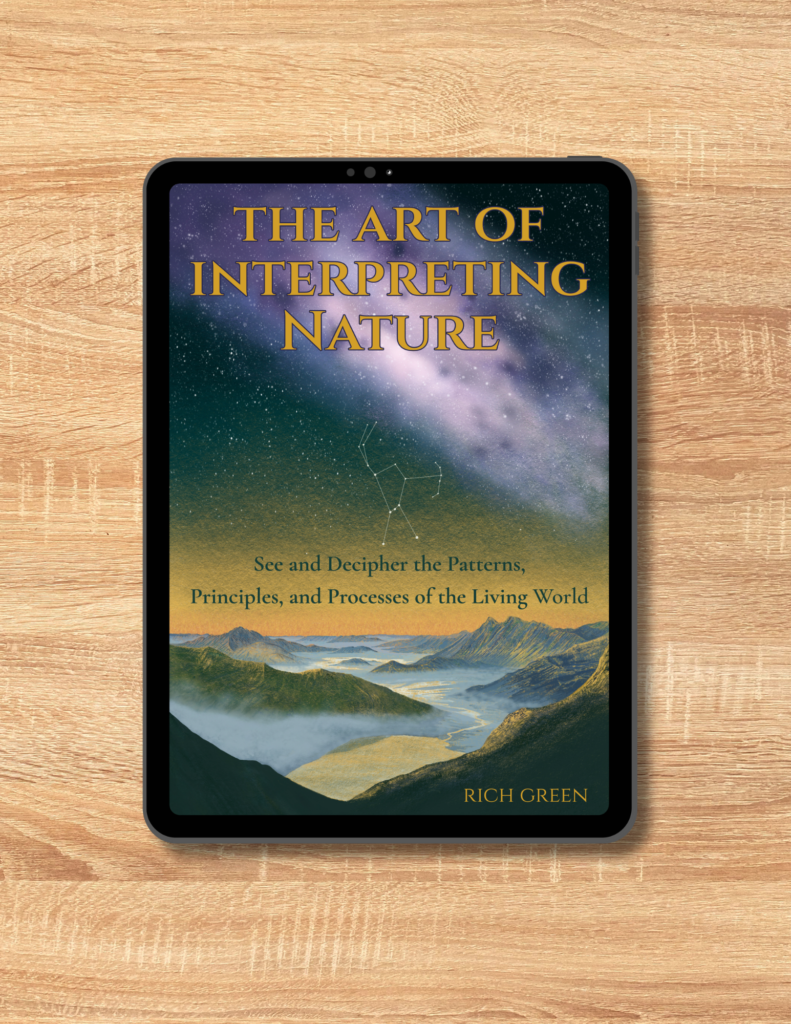
The Art of Interpreting Nature
See and decipher the patterns, principles and processes of the living world
Written and illustrated by Rich Green
· Instant download · Read on any device
60-day Money-Back Guarantee
ONLY £7.99
About the book
Written and illustrated by author-artist Rich Green, The Art of Interpreting Nature explores how nature communicates through pattern, process, and principle. It teaches you how to move beyond passive observation and begin interpreting the relationships, forces, and recurring forms that shape the living world.
The focus shifts from isolated facts to relationships and systems, helping you recognise meaningful patterns, connect them to the processes that produce them, and gradually understand the wider principles they reveal. What once appeared random begins to show structure, logic, and expression. Small signs connect into larger systems. Observation becomes interpretation.
At its core, The Art of Interpreting Nature is an invitation to look more deeply at the living world and discover that what once seemed random is often structured, connected and quietly expressive. By learning to read nature’s grammar, you begin to see relationships, patterns and meanings that transform simple observations into genuine understanding.
The book is available for instant download in EPUB format for reading on any device. The download includes a README file to help you upload to your devices.
Print and Use in the Field
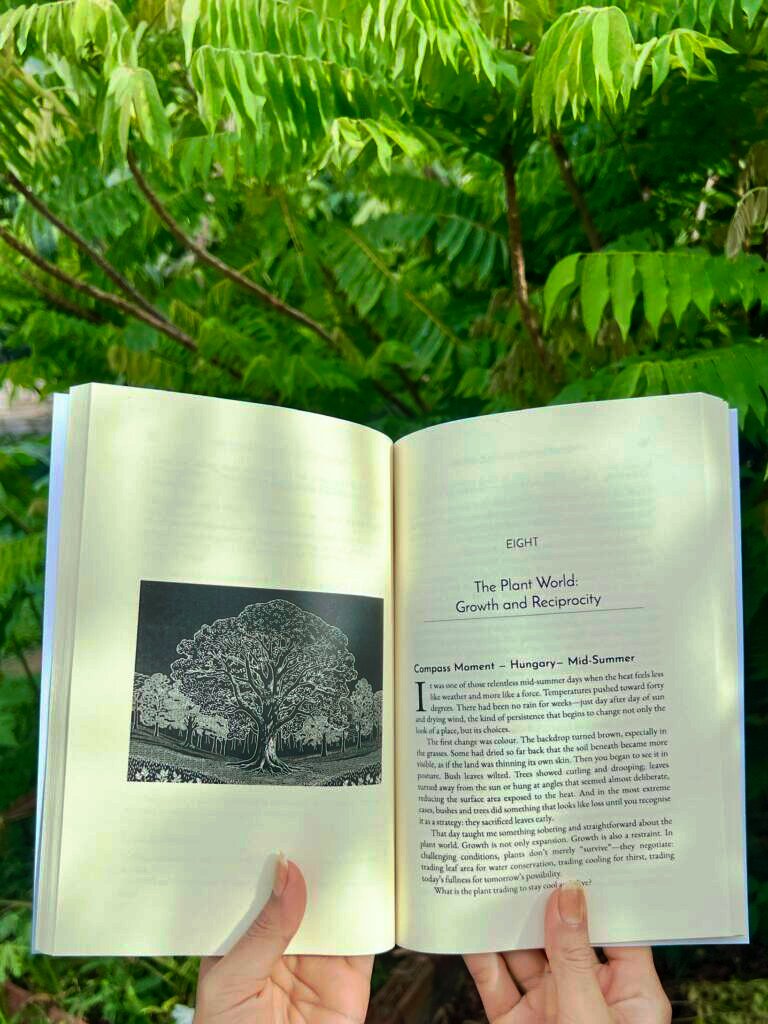
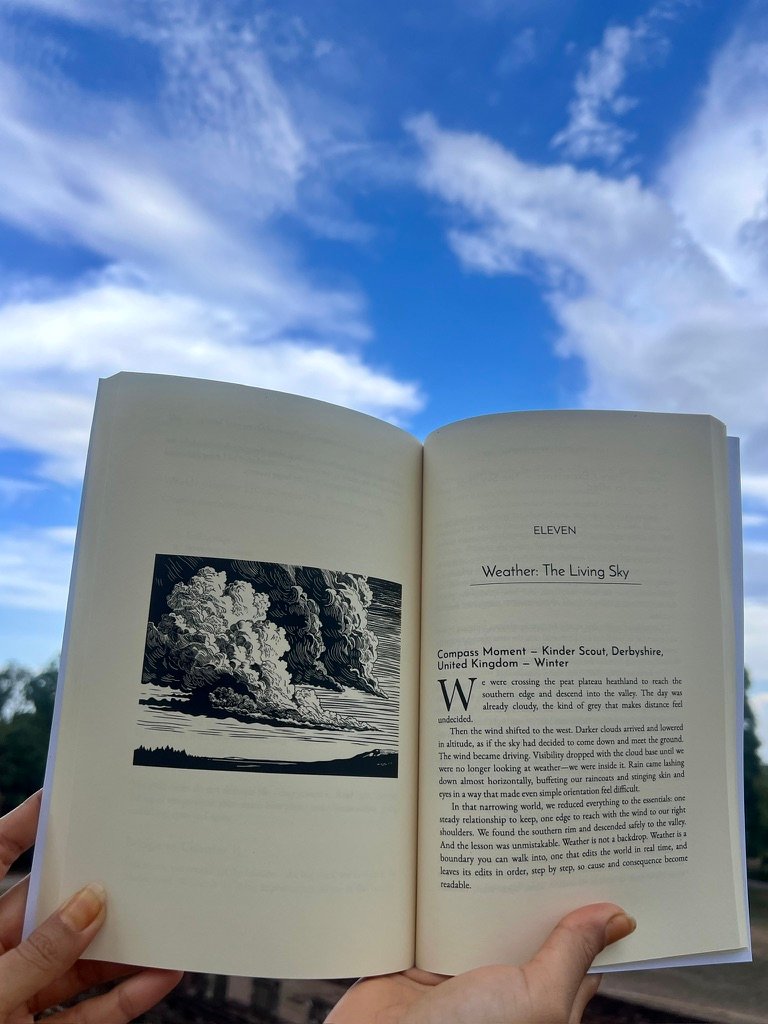
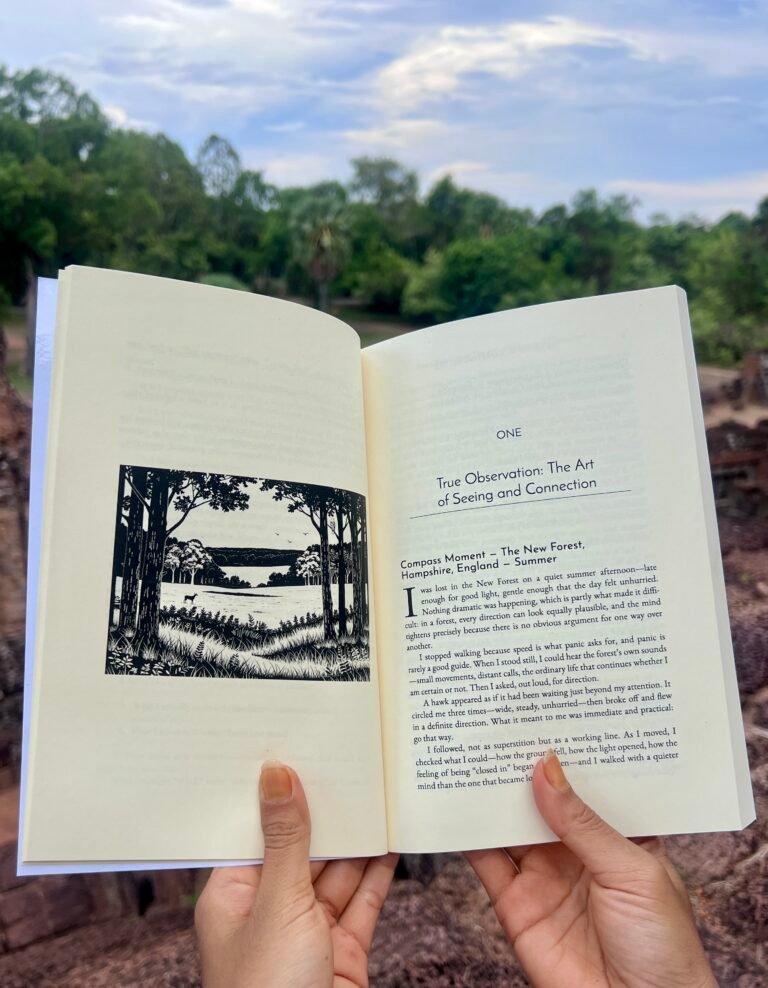
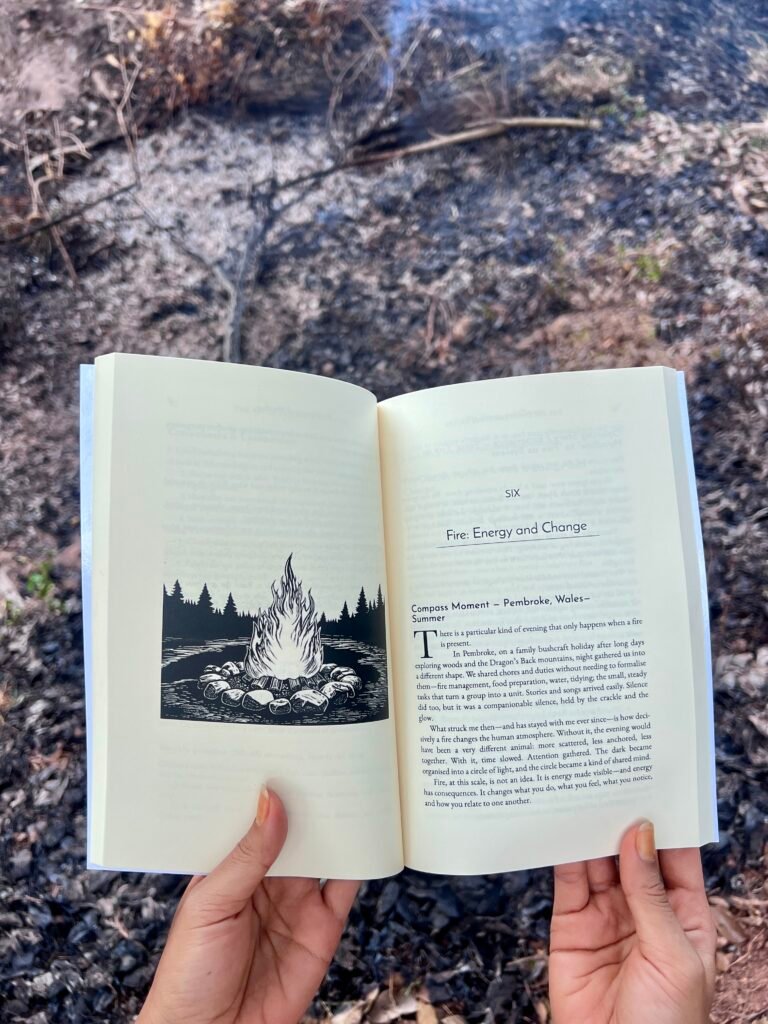
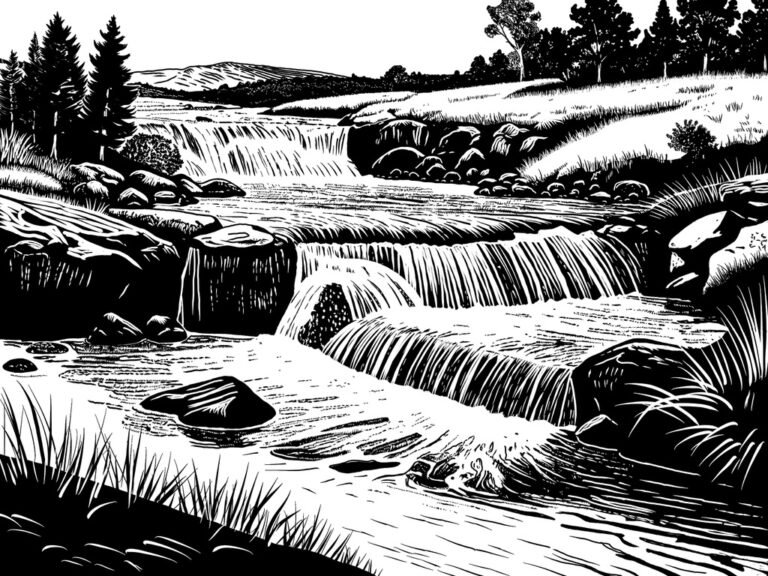
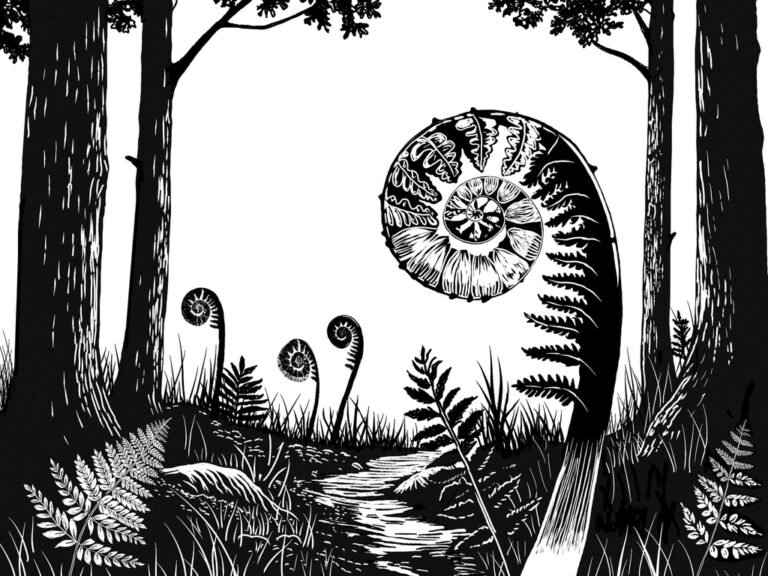
Original diagrams and illustrations by author Rich Green
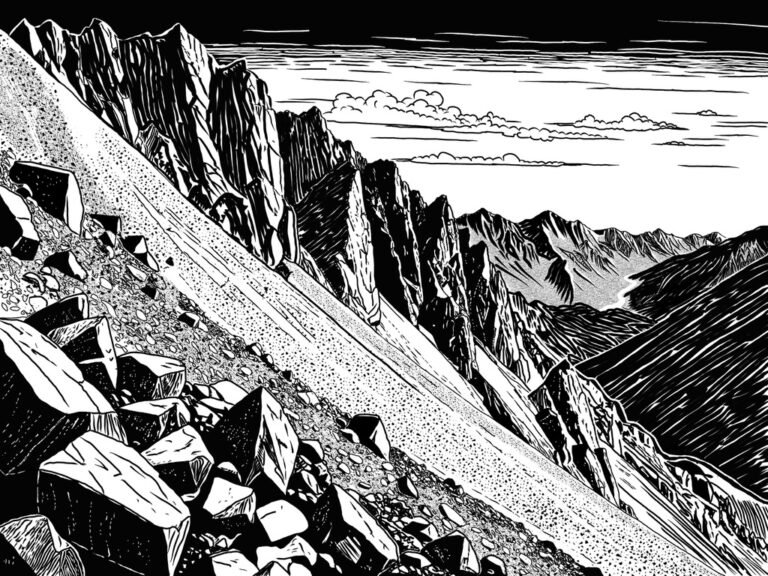
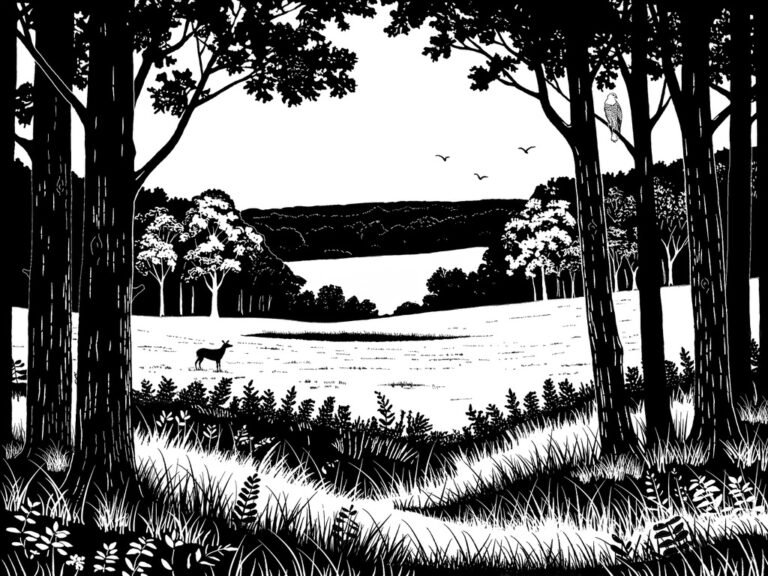
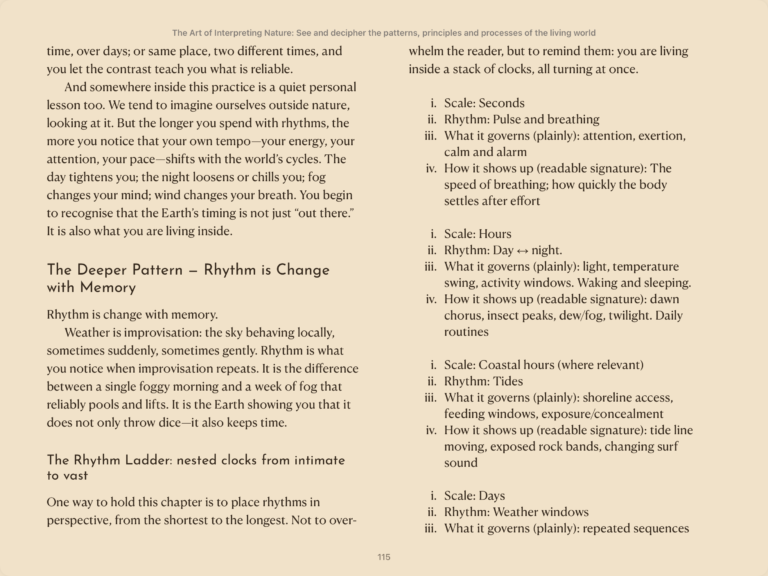
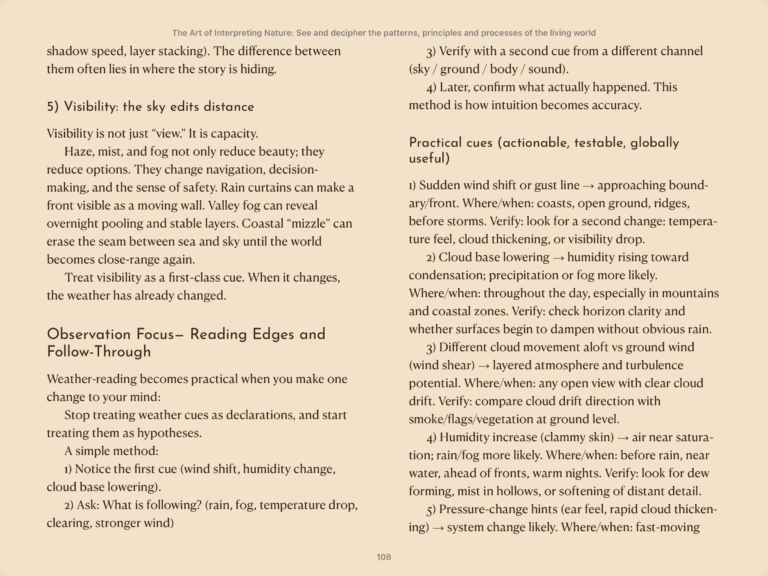
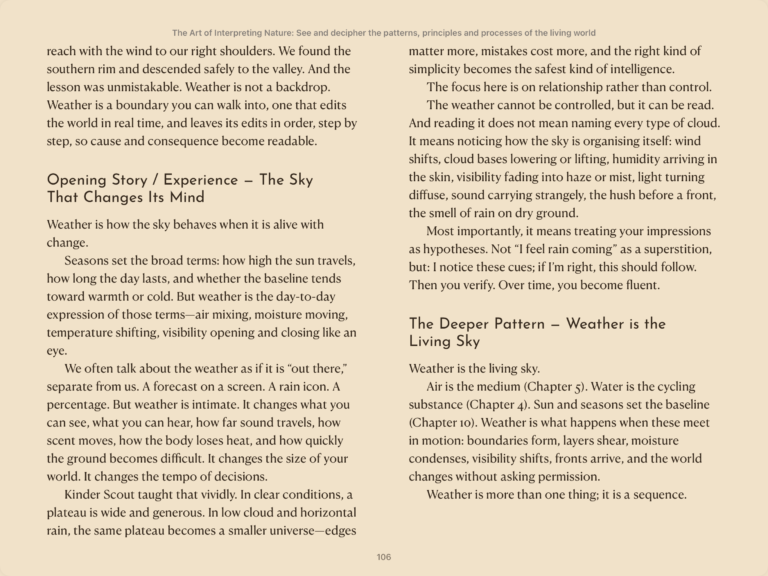
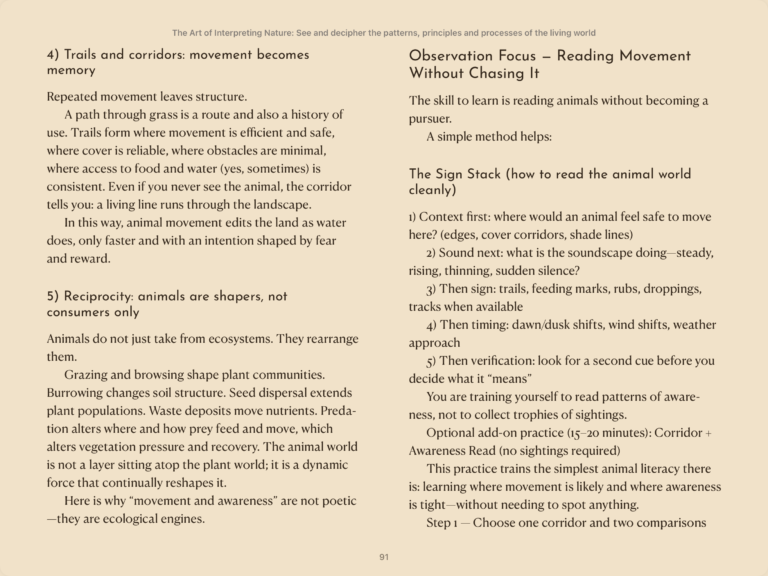
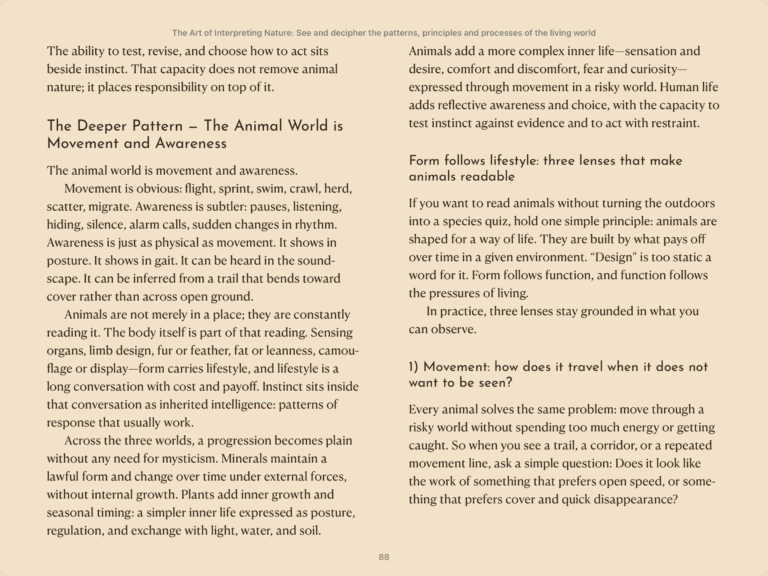
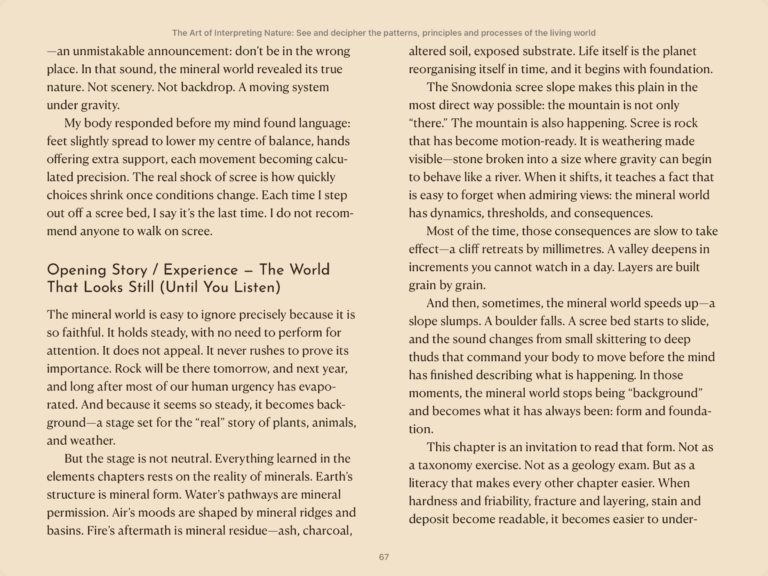
Sample Pages Of the eBook
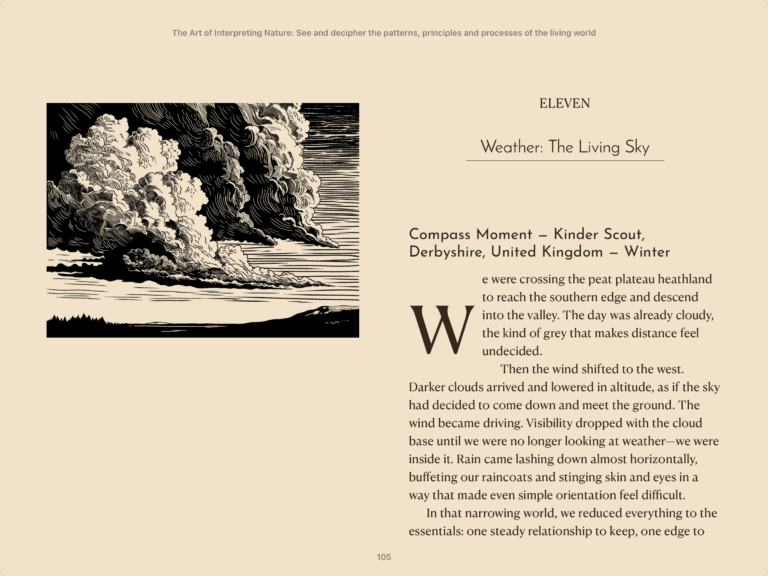
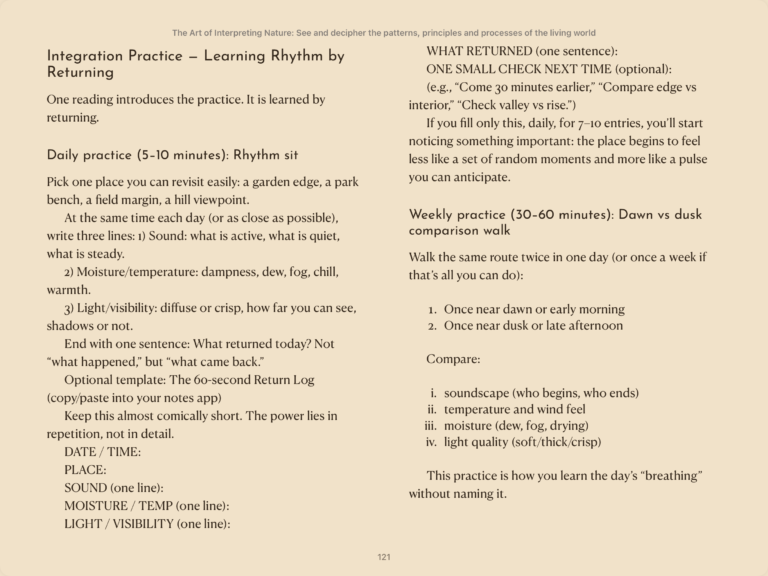
Who this book is for
The book is for readers who feel that nature holds deeper intelligence, patterns, and meaning – but have never been given a practical framework for understanding it.
- Naturalists & Outdoor Practitioners
- Educators & Field Guides
- Systems Thinkers & Observers
- Walkers, Artists, & Curious Minds
- Mindfulness & Pure Thought Practitioners
- Nature Lovers
What you will develop
As you move through the book, you begin to develop a different relationship with the natural world – one based not only on observation but also on interpretation.
You will learn how to:
- Notice patterns, relationships, and living processes in the natural world.
- Recognise how environments respond to changing conditions
- Become more observant on everyday walks.
- Compare, reflect upon, and interpret what you experience directly in the field.
- See beyond isolated details into connected processes
- Experience nature not just as scenery, but as something structured, meaningful and alive.
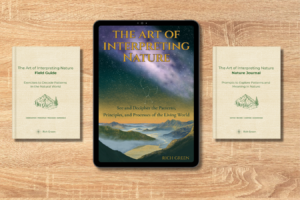
Upgrade to the Interpreting Nature Bundle
Check out the complete Interpreting Nature Field Kit Bundle, including The Art Of Interpreting Nature, ebook, Field Guide PDF and Nature Journal PDF for a deeper understanding.
Testimonials
Dave Royle
Nature Journalor
I was struck by the depth of knowledge and the clarity with which it explains what nature actually is and what it consists of. Instead of presenting scattered facts, the book reveals the underlying structure - the blueprint - behind the natural world. Concepts that once felt complicated became understandable and meaningful. I came away with a much deeper appreciation for how nature works and how everything is connected through patterns and processes.
Mike McGrath
Forest School Teacher
The real-life stories woven through the book made the learning feel genuine and relatable. These experiences added a human touch that helped me see how the ideas work in everyday situations, not just in theory. The stories felt honest and grounded, giving the book a sense of realism that kept me engaged from beginning to end. It felt like being guided by someone who has truly spent time observing and learning from nature
Sue Brooks
Teacher
What sets the book apart is the way it gets you outside, actively working with nature rather than just reading about it. The field exercises are simple, practical, and surprisingly powerful. They have helped me slow down, observe more carefully, and truly understand what I am seeing. Over time, I noticed my confidence growing as my observations became more accurate. This book doesn't just teach - you experience the learning yourself.
Frequently asked questions
Who should read The Art of Interpreting Nature?
This book is aimed at people who want practical, experience‑based methods for understanding living systems, whether they are walkers, gardeners, land managers, or anyone building observational skill through regular practice.
Is the eBook available immediately?
Yes—the book is available for instant download in EPUB & PDF formats for reading on any device. The download includes a read-me file to help with uploading to your devices.
Do I need to have read The Art of Reading Nature first?
No, this book stands on its own as a practical guide. However, readers who have completed Book 1 will find that the material here goes a little deeper and connects directly to the observational foundation introduced in Book 1.
What kind of time commitment is required to get value from the book?
The book is designed for short, repeatable practice: many exercises take only a few minutes, while others invite longer field sessions and reflective journaling; steady, regular practice yields the most reliable progress.
Does the book require specialist equipment or scientific training?
No, the emphasis is on low‑tech observation and simple measures you can use with your eyes, notes, and a basic field notebook rather than specialised instruments or formal scientific training.
Are the methods suitable for urban as well as rural settings?
Yes, the approach applies wherever there are living systems to observe, and many examples and exercises are deliberately applicable to gardens, parks, roadside verges, and other urban landscapes.
How are exercises structured in each chapter?
Each chapter pairs a concise explanation with practical field study practices, structured observation exercises, and journal headings that guide you to notice, form testable ideas, and revise those ideas from real experience.
Will I get species identification or exhaustive natural history here?
The focus is on patterns, processes, and interpretation methods rather than encyclopedic species accounts, so you will learn how to understand behaviour and relationships more than how to identify every species.
How does the method notice, name, test, revise work in practice?
The method asks you first to notice a pattern, then give it a clear name or description, form a simple hypothesis to test in the field, and finally revise your understanding based on the evidence you collect and record in your journal.
Can I use the book for teaching or leading groups?
Yes, the exercises and journal prompts are practical for small groups and field sessions, though the book is written primarily for individual practice and reflection.
What should I bring to the field when using these exercises?
A small notebook, a pen, comfortable footwear, and an attention to detail are sufficient for most exercises; optional items include a simple hand lens, a basic measuring tape, and a camera for reference.